


All
-
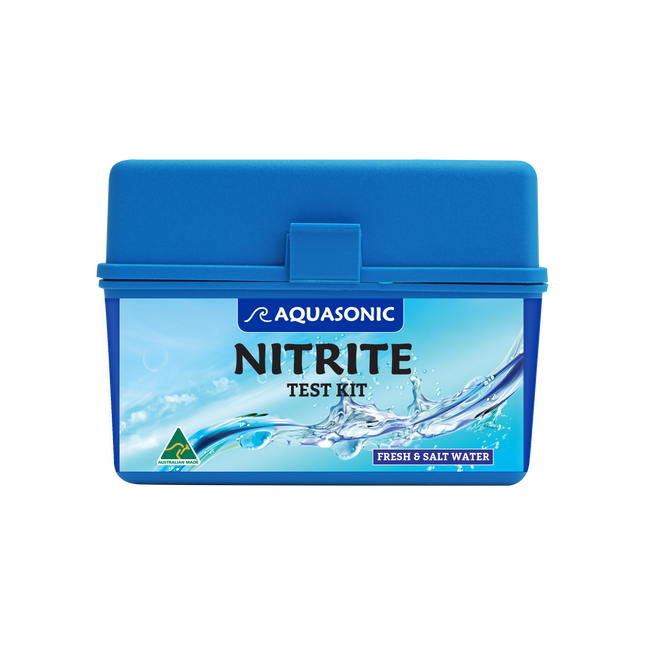
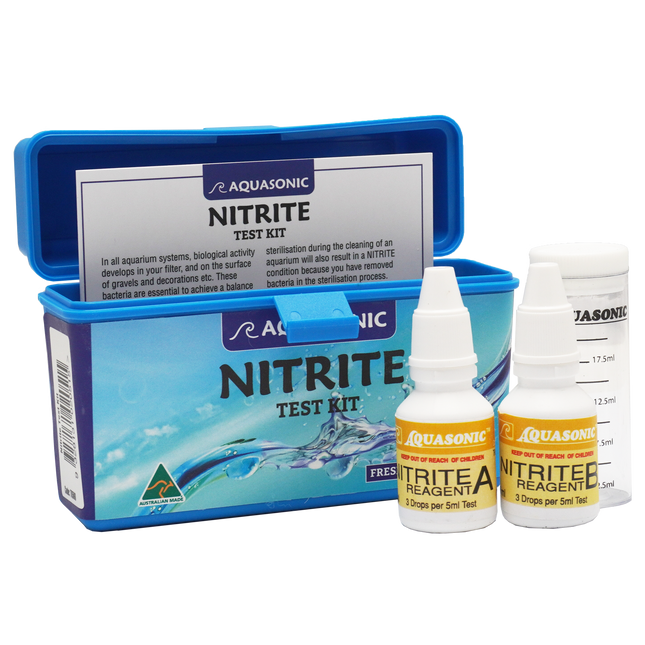
Aquasonic Aquasonic - Nitrite Test Kit
In all aquarium systems, biological activity develops in your filter, and on the surface of gravels and decorations etc. These bacteria are essential to achieve a balance in your aquarium and different types of bacteria need to be present in the right proportions to break down waste and deal with ammonia, nitrite and nitrate, which can all be harmful to your fish. Every time you change or add something in your tank, or you clean it, you potentially upset the balance because you are effectively removing some of these bacteria. The replacement of plants and coral or cleaning of filters, gravel or substrate, even in part, can also cause a NITRITE condition to re-occur, even in well-established aquariums. Complete sterilisation during the cleaning of an aquarium will also result in a NITRITE condition because you have removed bacteria in the sterilisation process.NITRITE is toxic to fish, even in quantities as small as 1ppm. If you are starting a new aquarium, it is recommended that you don’t put new fish into the system until a NITRITE reading of less than 1ppm is achieved (ideally zero). Recurring Nitrite Condition The biological activity in a filter may take as long as three months to develop fully, and in this time, due to increases in the number of fish, the NITRITE condition may re-occur. Evidence has shown, by lowering the pH to 7.5, the toxicity of NITRITE is minimised. If a system does develop nitrite on a continual basis, after it is fully conditioned, it may mean that the surface area of the biological filter is undersized, or the number of fish in the tank is too great. Assisting Biological Establishment To assist, ensure the temperature is steady, at or above 26 deg C, check the flow of water through the filters is well distributed and sufficient, and oxygen levels are adequate. When cleaning your filter media, use cold or lukewarm water only as hot water will kill the bacteria. To Break The Ammonia - Nitrite - Nitrate Cycle: Perform a water change Remove anything that can cause ammonia to form (e.g., dead organic matter or excess fish waste) from amongst the substrate (e.g., gravel cleaner) Use Aquasonic AMMO-GONE to neutralise ammonia in the system. The manual addition of live strains of nitrifying bacteria can also aid in kick starting the biological activity in the filter system. Directions for Use: Rinse the clean test tube and cap several times in the water to be tested. Fill the test tube to the 5ml mark with the water to be tested. Add 3 drops of Nitrite Reagent A. Add 3 drops of Nitrite Reagent B. Cap the test tube and invert twice. Wait a minimum of 2 minutes, but no longer than 3 minutes, to compare the test with the colour chart. After this time the test will continue to colour, but further colouration is irrelevant. Place the test tube on the white background of the colour chart and view vertically down the tube. The colour in the test tube is best viewed with natural light behind you. After completion of the test, wash the test tube carefully as a previous test could influence the next one.
$33.49 $26.00
-

Aquasonic Aquasonic - Phosphate Test Kit
About Phosphates There are two types, Organic and Inorganic. The type we test for in aquaria is the Inorganic type, PO4. All living matter contains phosphorus but unfortunately organic phosphate can only be tested for in laboratories using sophisticated testing equipment. The Effect of Phosphates In reef aquariums, levels of phosphates above 0.5ppm can adversely affect the growth of both hard and soft corals. It is recommended to keep phosphates at a maximum of 0.25ppm. In both fresh and saltwater aquariums phosphates above 0.5ppm can cause the growth of hair algae, blue green algae and other types of algae, including green water in ponds and lakes. A side affect of phosphate in saltwater aquarium, is the precipitation of calcium. There is no evidence that levels of phosphates affect the health of fish. High levels, say above 20ppm, may affect growth. Where Phosphate Comes From The sources can be many and varied. Some tap water contains phosphates originating from agricultural run off or added by municipal water authorities to reduce levels of heavy metals. Some phosphates are a bi-product of fish waste or decaying algae. Some aquarium products e.g., pH adjusters, contain some phosphates. Most phosphate, however, comes from uneaten fish food due to over-feeding. How to Reduce Phosphates The two considerations are: A) to reduce the level already present in the aquarium, use a Phosphate Sponge or similar. B) by changing some water in the aquarium. Take steps to stop the build up in the first place. If the tap water contains phosphates, filter before use with a Phosphate Sponge or use RO water. Do not over feed. Most important in controlling phosphates in any situation is to reduce the levels of waste or debris that may be present in the aquarium gravel or in silt behind rocks, coral etc. Change pre-filter or mechanical filters on a weekly or more frequent basis. How to Determine Phosphate (as Inorganic Orthophosphate) in Salt or Fresh Water Rinse the clean test tube several times in the water to be tested. Fill the test tube to the 20ml mark with sample to be tested. Add 4 drops of Reagent A. If solution turns red, add Reagent B dropwise until colour disappears. If there is no colour evident after adding Reagent A go to step 4. Add 4 drops of Reagent B and mix. Add 2 drops of Reagent C and mix immediately. Wait one minute but no longer than five minutes after the addition of Reagent C to measure the colour intensity of the sample against the colour chart. Place the test tube on the white background of the colour chart, view vertically with the light behind you. The colour in the test tube is best viewed with natural light. Note Be sure to cap all reagent bottles tightly. Reagent B is highly acidic and will cause skin irritation. If skin contact does occur wash immediately with cold water. After completion of the test, wash the test tube thoroughly as a previous test could influence the next one.
$46.29 $36.00
