


All
-

$11.99
-

Aquasonic Aquasonic - Goldfish Conditioning Salts (2.5kg)
Aquasonic Goldfish Water Conditioning Salts have been formulated to re-create natural conditions in your aquarium or fish bowl. It contains the correct balance of salts, natural minerals and trace elements, plus bacterial and fungal inhibitors, to promote health and wellbeing. Use Goldfish Water Conditioning Salts with new aquarium water, when starting up or doing a water change. It will raise General Hardness by approx. 120ppm and Salinity (NaCI) by 225ppm. Further addition of salt (NaCI) is not recommended. Directions for Use: Add one level teaspoon (approx. 5gm) per 10L of water. Re-seal container when not in use. Do not re-dose without a water change. To calculate approximate aquarium capacity: Multiply the length x width x water level height (in cm) and divide by 1,000 for litres.
$32.09
-

Aquasonic Aquasonic - Goldfish Conditioning Salts (500g)
Aquasonic Goldfish Water Conditioning Salts have been formulated to re-create natural conditions in your aquarium or fish bowl. It contains the correct balance of salts, natural minerals and trace elements, plus bacterial and fungal inhibitors, to promote health and wellbeing. Use Goldfish Water Conditioning Salts with new aquarium water, when starting up or doing a water change. It will raise General Hardness by approx. 120ppm and Salinity (NaCI) by 225ppm. Further addition of salt (NaCI) is not recommended. Directions for Use: Add one level teaspoon (approx. 5gm) per 10L of water. Re-seal container when not in use. Do not re-dose without a water change. To calculate approximate aquarium capacity: Multiply the length x width x water level height (in cm) and divide by 1,000 for litres.
$14.09
-
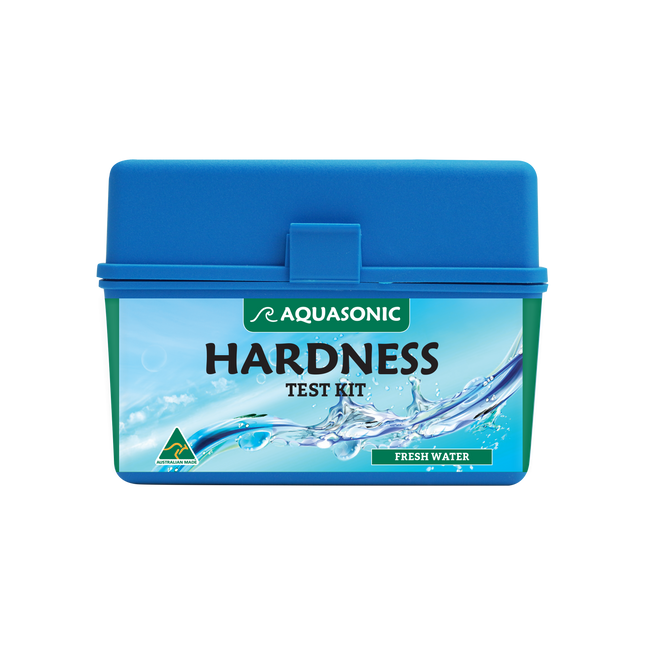
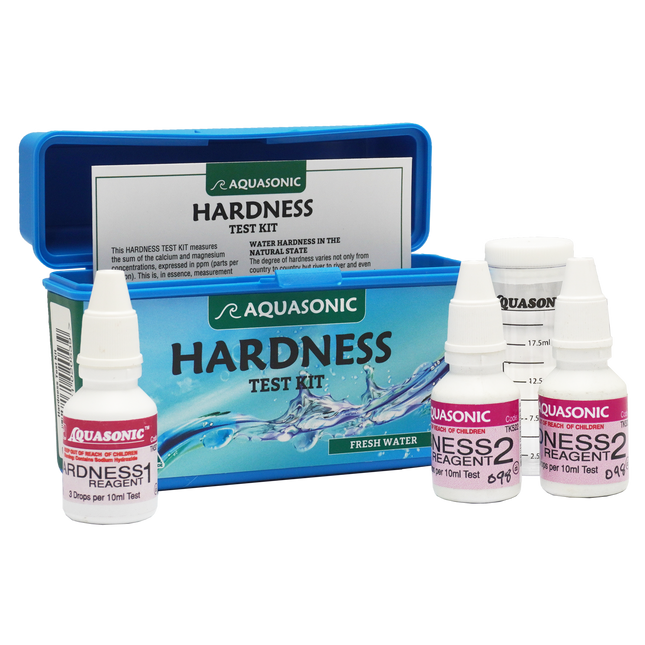
Aquasonic Aquasonic - Hardness GH Test Kit
This HARDNESS TEST KIT measures the sum of the calcium and magnesium concentrations, expressed in ppm (parts per million). This is, in essence, measurement of the permanent hardness of water, but the measurement may also contain some temporary hardness in the form of calcium dissolved by carbon dioxide in water. This form of temporary hardness is usually minimal. How Does Water Become Hard? Water hardness results from dissolved compounds of magnesium and calcium. With temporary hardness, magnesium and calcium are dissolved by carbon dioxidein water. This process can be reversed by removing the carbon dioxide, e.g. By boiling,or as aquatic plants use carbon dioxide. However, if the salts of magnesium or calciumare dissolved as a result of an acid present in water, the hardness becomes permanent. Water Hardness In The Natural State The degree of hardness varies not only from country to country but river to river and even the hardness in each river varies from season to season. Aquatic life have different requirements according to geographical location and though most fish can stand a great deal of variation in hardness, they do best at specific levels. Factors like breeding of a species, the colour of a species or even the inhibition of fungal diseases can be greatly enhanced by the hardness of water. Species Requirements Examples of fish that live at or below 150ppm are Angels, Corydoras, Catfish, Discus, Gouramis, Loaches, South American Tetras. Examples of fish that live between 150ppm and 300ppm are some Australian Natives, Guppies, Sword Tails, Mollies, Platties, and Goldfish. Examples of fish living above 300ppm and usually under 500ppm are African Cichlids, and Brackish water species. Directions for Use: The test kit has a dual range, measurements can be made in steps of 10ppm or 20ppm (ppm = parts per million). Complete the test within 5 minutes. To Test in 10ppm: Rinse a clean test tube several times in the water to be tested and fill to the 10 ml mark. Add 3 drops of Reagent 1, swirl to mix, then add 3 drops Reagent 2 and swirl to mix. Now add Reagent 3 (hold the bottle vertically), a drop at a time, swirl to mix before adding the next drop. Keep count of the drops. When the colour changes from red to blue the end point has been reached. Multiply the number of drops by 10 for the reading in parts per million. To Test in 20ppm: Rinse a clean test tube several times in the water to be tested and fill to the 5ml mark. Add 2 drops of Reagent 1, swirl to mix, then add 2 drops of Reagent 2 and swirl to mix. Now add Reagent 3 (hold the bottle vertically), a drop at a time, swirl to mix before adding the next drop. Keep count of the drops. When the colour changes from red to blue the end point has been reached. Multiply the number of drops by 20 for the reading in parts per million.
$39.79 $31.00
-

Aquasonic Aquasonic - Ichonex (100ml)
Aquasonic Ichonex assists in the treatment of white spot (Ichthyophirius multifillis) disease, without the toxic effects of conventional treatments and without staining. Directions for Use: Do not use on fish intended for human consumption. Ensure aquarium water is well aerated during treatment. Do not use activated carbon in the filtration system during treatment as this will remove the product from the aquarium water. If sub-gravel filtration is being used, slow down the flow rates during treatment. This product contains a dye which will stain if spilled. Dose Rate: Treatment should be over three days as follows: Initially add 5ml per 40litres of aquarium water. On days 2 and 3 use at half the initial rate.TO GIVE NUMBER OF LITRES: To calculate approximate tank capacity multiply length x width x water level height (all in cms) and divide by 1000 for litres. Remember: High standards of aquarium management must be maintained to prevent disease, as fish diseases are often management related. Consult your veterinarian or aquarium dealer for accurate diagnosis and advice. Storage: Store below 30C (Room Temperature). Replace lid tightly after use. Disposal: Dispose of empty container by wrapping paper and placing in garbage. First Aid Instructions: For advice, contact the Poisons Information Centre (phone Australia 13 11 26; New Zealand 0800 764 766) or a doctor (at once).
$10.59
-

Aquasonic Aquasonic - Ichonex (1L)
Aquasonic Ichonex assists in the treatment of white spot (Ichthyophirius multifillis) disease, without the toxic effects of conventional treatments and without staining. Directions for Use: Do not use on fish intended for human consumption. Ensure aquarium water is well aerated during treatment. Do not use activated carbon in the filtration system during treatment as this will remove the product from the aquarium water. If sub-gravel filtration is being used, slow down the flow rates during treatment. This product contains a dye which will stain if spilled. Dose Rate: Treatment should be over three days as follows: Initially add 5ml per 40litres of aquarium water. On days 2 and 3 use at half the initial rate.TO GIVE NUMBER OF LITRES: To calculate approximate tank capacity multiply length x width x water level height (all in cms) and divide by 1000 for litres. Remember: High standards of aquarium management must be maintained to prevent disease, as fish diseases are often management related. Consult your veterinarian or aquarium dealer for accurate diagnosis and advice. Storage: Store below 30C (Room Temperature). Replace lid tightly after use. Disposal: Dispose of empty container by wrapping paper and placing in garbage. First Aid Instructions: For advice, contact the Poisons Information Centre (phone Australia 13 11 26; New Zealand 0800 764 766) or a doctor (at once).
$40.49 $31.00
-

Aquasonic Aquasonic - Ichonex (250ml)
Aquasonic Ichonex assists in the treatment of white spot (Ichthyophirius multifillis) disease, without the toxic effects of conventional treatments and without staining. Directions for Use: Do not use on fish intended for human consumption. Ensure aquarium water is well aerated during treatment. Do not use activated carbon in the filtration system during treatment as this will remove the product from the aquarium water. If sub-gravel filtration is being used, slow down the flow rates during treatment. This product contains a dye which will stain if spilled. Dose Rate: Treatment should be over three days as follows: Initially add 5ml per 40litres of aquarium water. On days 2 and 3 use at half the initial rate.TO GIVE NUMBER OF LITRES: To calculate approximate tank capacity multiply length x width x water level height (all in cms) and divide by 1000 for litres. Remember: High standards of aquarium management must be maintained to prevent disease, as fish diseases are often management related. Consult your veterinarian or aquarium dealer for accurate diagnosis and advice. Storage: Store below 30C (Room Temperature). Replace lid tightly after use. Disposal: Dispose of empty container by wrapping paper and placing in garbage. First Aid Instructions: For advice, contact the Poisons Information Centre (phone Australia 13 11 26; New Zealand 0800 764 766) or a doctor (at once).
$17.59
-

Aquasonic Aquasonic - Iodine-Sup (100ml)
Aquasonic Iodine-Sup is formulated for iodine deficiencies in reef systems. Iodine is essential for the wellbeing of zooxanthellae algae living symbiotically within soft corals and anemones. Certain other species of algae require iodine which is easily depleted by living organisms. Protein skimming may also deplete reserves. Directions for Use: 1ml per 50ml each week. Do not overdose.More or less may be required according to stock load. Regular water changes must still be made as this is the best way of ensuring a correct balance of seawater constituents and a reduction of possible toxic build up. It is recommended that a water change of 25% or more per month be made.
$12.49
-

Aquasonic Aquasonic - Iodine-Sup (250ml)
Aquasonic Iodine-Sup is formulated for iodine deficiencies in reef systems. Iodine is essential for the wellbeing of zooxanthellae algae living symbiotically within soft corals and anemones. Certain other species of algae require iodine which is easily depleted by living organisms. Protein skimming may also deplete reserves. Directions for Use: 1ml per 50ml each week. Do not overdose.More or less may be required according to stock load. Regular water changes must still be made as this is the best way of ensuring a correct balance of seawater constituents and a reduction of possible toxic build up. It is recommended that a water change of 25% or more per month be made.
$22.09
-
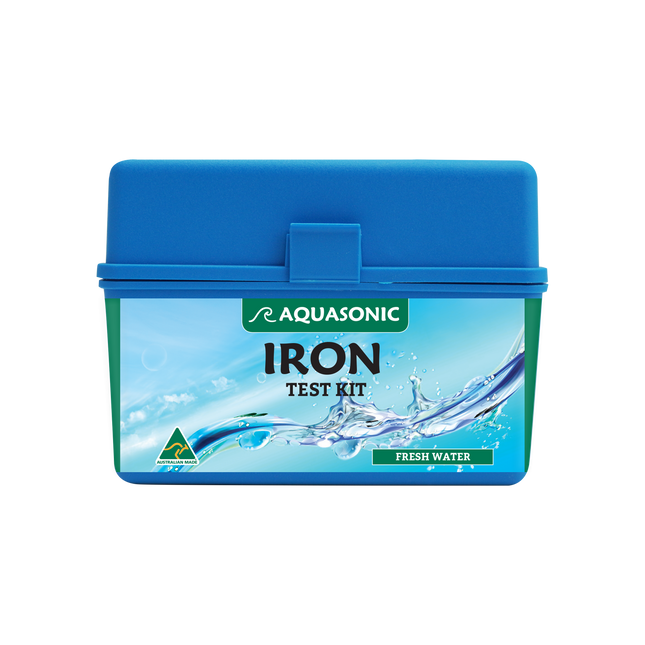
Aquasonic Aquasonic - Iron Test Kit
Growing Aquatic Plants In the natural state some river systems plants grow particularly well. These are the ones with certain water qualities and constant supplies of nutrients. Water that comes from limestone areas or springs (usually containing high levels of carbonates and/or carbon dioxide) support high levels of growth and plant varieties. Ponds or billabongs that contain rich sediment also support certain aquatic plants, growing in and out of water. The river systems however, that support the type of plants most suited to aquarium application are the ones with sustained levels of inorganic nutrients, one of the most important being iron. Plant Nutrients in the Aquarium Iron is considered the most important nutrient for aquatic plants. Recommended levels vary between 0.25 and 1.0ppm. Total levels of 2.0ppm may be harmful to both fish and plants. Aquatic plants can only use inorganic nutrients while they exist in a non-oxidized form. This fact presents a major problem when feeding aquatic plants ordinary fertilizers, because water and dissolved oxygen will oxidize certain important elements within hours. Furthermore, some of the nutrients supplied in plant foods, chiefly phosphates and nitrates, are unwanted in an aquarium and would most likely result in an algae problem. Aquasonic BASIC-GRO and DAILY-GRO have overcome the oxidization problem by specially formulating nutrients that only plants can use, nutrients made for aquatic application.
$39.79 $31.00
-

Aquasonic Aquasonic - Livebearer Conditioning Salts (2.5kg)
Livebearers originate from various habitats, such as rainforest streams, brackish swamps and even salt water inlets. Livebearers tend to become susceptible to fungus and bacterial infections from water changes, tank movement and catching fish. Aquasonic Livebearer Water Conditioning Salts have been formulated to re-create natural conditions in your aquarium or fish bowl. It contains the correct balance of salts, natural minerals and trace elements, plus bacterial and fungal inhibitors, to promote health and wellbeing. Use Livebearers Water Conditioning Salts with new aquarium water, when starting up an aquarium or doing a water change. Do not use with water used to top up aquarium evaporation. It will raise General Hardness by approx. 110ppm, TDS will rise by 690ppm and Salinity by 660ppm. Further addition of common salt is not recommended. NOTE: This may affect some aquatic plants. Directions for Use: Add one level teaspoon (approx. 5gm) per 5L of water. Re-seal container when not in use. Do not redose without a water change. To calculate approximate aquarium capacity: Multiply the length x width x water level height (in cm) and divide by 1,000 for litres.
$32.09
-

Aquasonic Aquasonic - Livebearer Conditioning Salts (500g)
Livebearers originate from various habitats, such as rainforest streams, brackish swamps and even salt water inlets. Livebearers tend to become susceptible to fungus and bacterial infections from water changes, tank movement and catching fish. Aquasonic Livebearer Water Conditioning Salts have been formulated to re-create natural conditions in your aquarium or fish bowl. It contains the correct balance of salts, natural minerals and trace elements, plus bacterial and fungal inhibitors, to promote health and wellbeing. Use Livebearers Water Conditioning Salts with new aquarium water, when starting up an aquarium or doing a water change. Do not use with water used to top up aquarium evaporation. It will raise General Hardness by approx. 110ppm, TDS will rise by 690ppm and Salinity by 660ppm. Further addition of common salt is not recommended. NOTE: This may affect some aquatic plants. Directions for Use: Add one level teaspoon (approx. 5gm) per 5L of water. Re-seal container when not in use. Do not redose without a water change. To calculate approximate aquarium capacity: Multiply the length x width x water level height (in cm) and divide by 1,000 for litres.
$14.09


