Fish Supplies

573 products

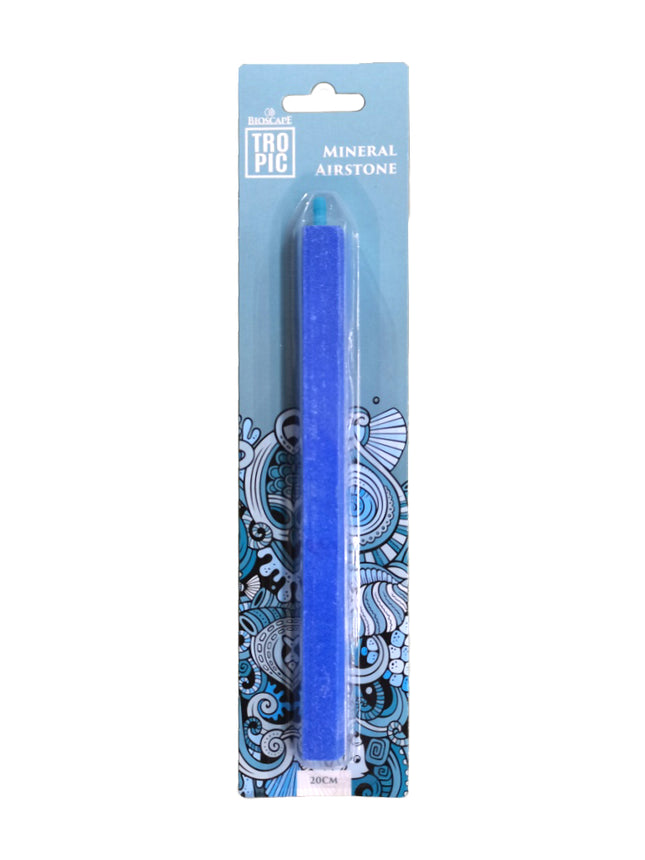
  • Bioscape - Mineral Airstone (20cm)

    Pet Pacific Misc. Bioscape - Mineral Airstone (20cm)

    Bioscape Mineral airstones are more durable and longer-lasting than other types of airstones, which can reduce the need for frequent replacement. These airstones create fine bubbles which can enhance the visual appeal of the aquarium and improve the overall oxygenation and water circulation in the tank.

    $7.79

  • Bioscape - Mineral Airstones Slim (3pk)

    Pet Pacific Misc. Bioscape - Mineral Airstones Slim (3pk)

    Bioscape Mineral airstones are more durable and longer-lasting than other types of airstones, which can reduce the need for frequent replacement. These airstones create fine bubbles which can enhance the visual appeal of the aquarium and improve the overall oxygenation and water circulation in the tank.

    $6.19

  • Fluval - Bio Max Rings (1100g)

    Fluval Fluval - Bio Max Rings (1100g)

    Fluval BIOMAX bio rings have a complex pore system where beneficial bacteria can thrive. They have more capacity than most biological media, which ensures optimal contact time for greater efficiency. BIOMAX also reduces and controls ammonia and nitrite.

    $35.49

  • API - Algae Scraper for Acrylic Aquariums

    API API - Algae Scraper for Acrylic Aquariums

    The API ALGAE SCRAPER is an incredibly durable algae scraper with an 18” long handle to effectively clean acrylic aquarium walls and prevent user from getting too wet. This item scrapes and removes algae quickly and easily and may be used as frequently as needed.   Do not use on dry surfaces. Rinse pad with tap water before and after use. Not for use on glass aquariums. FAQs Can I use an API ALGAE SCRAPER on any type of aquarium? No, API designs two separate scrapers for two different types of aquarium material: glass and acrylic. The appropriate scraper should be used on the corresponding tank to reduce the risk of scratching or damaging your aquarium. When should I use the API ALGAE SCRAPER? Use the API ALGAE SCRAPER to eliminate unsightly algae on aquarium walls as needed, but roughly once a week at a minimum to ensure tank cleanliness and clarity. Use any time algae accumulates on the walls of your aquarium.

    $34.49

  • Aquasonic - Carbonate Hardness Generator (2.5kg)

    Aquasonic Aquasonic - Carbonate Hardness Generator (2.5kg)

    The Carbonate Hardness (kH) or also referred to as alkalinity of water is the basis for pH values. The stability of pH can be ensured by raising carbonate hardness levels without effect on general hardness.Acids produced in closed circuit aquaria continuously reduce the carbonate hardness levels.   Carbonate Hardness Generator is a special blend of pH buffers that provide a sustained kH level for longer than if using just sodium bicarbonate. Prior raising of carbonate levels will avert drastic falls in pH resultant from these acids, acting to maintain a more stable pH.   Directions for Use: 4g (approx. 1 teaspoon) per 100L of water or 40g per 1000L of water raises carbonate hardness levels by 20ppm. Caution pH levels may rise. It is not recommended to raise carbonate hardness values by more than 20ppm per day.To calculate approximate aquarium capacity: Multiply the length x width x height (in cm) and divide by 1,000 for litres.

    $41.99

  • Ocean Free - Smart 1500 Carbon Cartridge

    Pet Pacific Misc. Ocean Free - Smart 1500 Carbon Cartridge

    Ocean Free - Smart 1500 Carbon Cartridge is replacement Carbon/Zeolite suitable for the Ocean Free - Smart 1500 Internal Filter

    $25.99

  • Aquasonic - Betta Conditioning Salt (500g)

    Aquasonic Aquasonic - Betta Conditioning Salt (500g)

    Aquasonic Betta Water Conditioning Salts have been formulated to re-create natural conditions in your aquarium. It contains the correct balance of salts, natural minerals and trace elements, plus bacterial and fungal inhibitors, to promote health and wellbeing.   Use Betta Water Conditioning Salts with new aquarium water, when starting up or doing a water change. It will raise General Hardness by approx. 80ppm and Salinity (NaCI) by 130ppm. Further addition of salt (NaCI) is not recommended.   Direction for Use: Add 5g (1 level teaspoon) per 15L of water. Re-seal container when not in use. Do not redose without a water change. To calculate approximate aquarium capacity: Multiply the length x width x water level height (in cm) and divide by 1,000 for litres.   For aquarium use only. Keep out of reach of children.

    $11.39

  • Aquasonic - Basic Freshwater pH Test Kit Aquasonic - Basic Freshwater pH Test Kit

    Aquasonic Aquasonic - Basic Freshwater pH Test Kit

    What is pH? Technically it is the measurement of the hydrogen ion concentration of a given sample of water. From this measurement it can be determined whether the water is acid, neutral or alkaline. The scale extends from 0 to 14. A pH between 0 and 7 is termed acid, and a pH between 7 and 14 is termed alkaline. The indicator in this kit has a pH range from 6.0 to 7.8 and is therefore suitable for most freshwater aquaria. At or below pH 6.0 the test sample would turn yellow. At or above pH 7.8 the test sample would turn blue.   Why pH Changes pH is not a constant factor and is subject to continual change due to influences like bacterial assimilation of waste causing acidity or calcium and magnesium compounds like shells or coral that cause alkalinity. Thus, under normal aquarium conditions, because of fish waste and unused food, the water would drift to acidity.   Directions for Use: Rinse a clean test tube and cap several times in water to be tested.  Fill to line (12.5ml) with water to be tested. Add 3 drops of Indicator solution Place the test tube on the white background of the colour chart, view vertically (down inside the test tube) with the light behind you. The colour in the test tube is best viewed with natural light. View immediately.   Adjust pH slowly.

    $17.59

  • Members' Saving -22% Aquasonic - Hardness GH Test Kit Aquasonic - Hardness GH Test Kit

    Aquasonic Aquasonic - Hardness GH Test Kit

    This HARDNESS TEST KIT measures the sum of the calcium and magnesium concentrations, expressed in ppm (parts per million). This is, in essence, measurement of the permanent hardness of water, but the measurement may also contain some temporary hardness in the form of calcium dissolved by carbon dioxide in water. This form of temporary hardness is usually minimal.   How Does Water Become Hard? Water hardness results from dissolved compounds of magnesium and calcium. With temporary hardness, magnesium and calcium are dissolved by carbon dioxidein water. This process can be reversed by removing the carbon dioxide, e.g. By boiling,or as aquatic plants use carbon dioxide. However, if the salts of magnesium or calciumare dissolved as a result of an acid present in water, the hardness becomes permanent.   Water Hardness In The Natural State The degree of hardness varies not only from country to country but river to river and even the hardness in each river varies from season to season. Aquatic life have different requirements according to geographical location and though most fish can stand a great deal of variation in hardness, they do best at specific levels. Factors like breeding of a species, the colour of a species or even the inhibition of fungal diseases can be greatly enhanced by the hardness of water.   Species Requirements Examples of fish that live at or below 150ppm are Angels, Corydoras, Catfish, Discus, Gouramis, Loaches, South American Tetras. Examples of fish that live between 150ppm and 300ppm are some Australian Natives, Guppies, Sword Tails, Mollies, Platties, and Goldfish. Examples of fish living above 300ppm and usually under 500ppm are African Cichlids, and Brackish water species.   Directions for Use: The test kit has a dual range, measurements can be made in steps of 10ppm or 20ppm (ppm = parts per million). Complete the test within 5 minutes.   To Test in 10ppm: Rinse a clean test tube several times in the water to be tested and fill to the 10 ml mark. Add 3 drops of Reagent 1, swirl to mix, then add 3 drops Reagent 2 and swirl to mix. Now add Reagent 3 (hold the bottle vertically), a drop at a time, swirl to mix before adding the next drop. Keep count of the drops. When the colour changes from red to blue the end point has been reached. Multiply the number of drops by 10 for the reading in parts per million. To Test in 20ppm: Rinse a clean test tube several times in the water to be tested and fill to the 5ml mark. Add 2 drops of Reagent 1, swirl to mix, then add 2 drops of Reagent 2 and swirl to mix. Now add Reagent 3 (hold the bottle vertically), a drop at a time, swirl to mix before adding the next drop. Keep count of the drops. When the colour changes from red to blue the end point has been reached. Multiply the number of drops by 20 for the reading in parts per million.

    $39.79 $31.00

  • Members' Saving -22% Aquasonic - Calcium Test Kit

    Aquasonic Aquasonic - Calcium Test Kit

    What is Calcium? Calcium, scientific formula as Ca, is a very important element for most animal life, especially for corals and shellfish. It is the main cause of hard freshwater. Certain species of freshwater fish require certain levels of calcium. It is also the main ingredient in limestone, shellgrit and coral. Calcium, as an element, does not affect pH.   Normal Levels In seawater the level of calcium at normal specific gravity is 383ppm. If seawater is used at a lower specific gravity than normal, levels of calcium will be proportionally less. For freshwater aquariums please check appropriate text books, however all Aquasonic Water Conditioners have exacting amounts of calcium to suit designated species.   Calcium Build Up It is most important in both fresh and saltwater aquaria to set the levels of calcium when establishing the aquarium and then hold the appropriate levels by the addition, if necessary, of calcium in prescribed amounts. The use of shellgrit or coral rubble as a substrate or filter material can cause calcium levels to continually rise, to unacceptable levels.   Reef Aquariums A maximum level of 450ppm is recommended for Reef Aquariums. If the level is taken above this then Carbonate Hardness levels, the main reason for stable pH, may be affected. The calcium would precipitate the carbonate as calcium carbonate. Calcium is used by calcareous algae, corals and shellfish, so in some situations, levels may require constant replenishment.   To Set Calcium Levels In salt water, maintain levels with Aquasonic Ocean Nature Sea Salt. Normal specific gravity = 383ppm. Raise calcium in saltwater with Aquasonic Calcium-Sup. In freshwater, maintain levels with Aquasonic Water Conditioning Salts.   Directions for Use: To determine Calcium in Salt or Fresh Water. Read Instructions Carefully Before Use. The test kit has a dual range. Measurements can be made in steps of 25ppm or 50ppm.   Note: Seawater usually contains 350-450ppm of calcium.   To Test in 25ppm: Rinse a clean test tube several times in the water to be tested and fill to the 10ml mark. Add 1 level scoop of Reagent A and 4 drops of Reagent B. Shake until powder dissolves (about 1-2 minutes). Solution will turn bright red if calcium is present. Immediately add Reagent C a drop at a time, swirling to mix after each addition. Keep count of the number of drops until colour changes to the end point (see chart) and multiply this by 25 to give calcium in ppm.   To Test in 50ppm: Rinse a clean test tube several times in the water to be tested and fill to the 5ml mark. Add 1/2 scoop of Reagent A and 2 drops of Reagent B. Shake until powder dissolves (about 1 minute). Solution will turn bright red if calcium is present. Immediately add Reagent C a drop at a time, swirling to mix after each addition. Keep count of the number of drops until colour changes to the end point (see chart) and multiply by 50 to give calcium in ppm. *This colour chart provides a basic guide only. Colours may vary according to various water conditions.

    $39.79 $31.00

  • Aquasonic - Power Water Conditioner (250ml)

    Aquasonic Aquasonic - Power Water Conditioner (250ml)

    Use Power Water Conditioner when starting up an aquarium to remove chlorine and chloramines which can be very harmful to aquarium fish. Power also contains elements that will remove heavy metals from the aquarium. Fungal inhibitors have also been added to help guard against infections.   Directions for Use: 1ml per 10L of water. Use Power when starting up a new aquarium or when adding water for a water change. Premix Power with tap water before adding to aquariums containing fish. After using Power in freshwater aquariums always add Aquasonic Water Conditioning Salts to maintain that natural environment for your fish. In marine aquariums, use Power before the addition of Aquasonic Ocean Nature Sea Salt.

    $19.69

  • Aquasonic - Power Water Conditioner (5L)

    Aquasonic Aquasonic - Power Water Conditioner (5L)

    Use Power Water Conditioner when starting up an aquarium to remove chlorine and chloramines which can be very harmful to aquarium fish. Power also contains elements that will remove heavy metals from the aquarium. Fungal inhibitors have also been added to help guard against infections.   Directions for Use: 1ml per 10L of water. Use Power when starting up a new aquarium or when adding water for a water change. Premix Power with tap water before adding to aquariums containing fish. After using Power in freshwater aquariums always add Aquasonic Water Conditioning Salts to maintain that natural environment for your fish. In marine aquariums, use Power before the addition of Aquasonic Ocean Nature Sea Salt.

    $52.89

Fish Supplies

Login

Forgot your password?

Don't have an account yet?
Create account