


Fish Supplies
-


Frozen Foods Frozen Discus Mix (100g)
Frozen Discus Mix (100g) contains Bloodworm, Mysis, Brine Shrimp, Krill & Squid. The nutritious mixture is perfect for a variety of different species including: Discus Angelfish Medium & Large South American Cichlids Corydoras & other Catfish Rasboras Danios Whiteclouds Medakas Silver Dollars Sharks Crabs, Yabbies & Shrimp Aquarium Industries Frozen Food Range contains the same ingredients that fish and turtles feed on naturally. They perfectly complement dry foods and will contribute to a balanced diet which keeps fish healthy. They also contain no preservatives or artificial colours. Every pack contains useful feeding tips and a detailed list of the contents, so that you can make the right choice for your pet. To learn the benefits of frozen fish food, check out our blog here.
$10.89
-

API API - Pond Care Aquatic Plant Tabs (25pk)
AQUATIC PLANT FOOD TABLETS provide essential nutrients and trace elements needed by pond plants to ensure non-stop blooming. Tablets contain iron for lush, green growth and boron to promote flower formation. It keeps water lilies blooming all season long, stimulates lush foliage and beautiful blooms of all aquatic pond plants (hardy tropical plants and marginal and bog plants). Feed plants once a month until the water temperature reaches 70⁰F, then feed twice a month. Stop using Aquatic plant food tablets when the water temperature drops below 60⁰F. Use one tablet for every gallon of soil. Push the tablet into the plant soil, 3 inches from the crown of the plant and 3 to 6 inches deep into the soil. Do API AQUATIC PLANT FOOD TABLETS need to be inserted into soil to work? API AQUATIC PLANT FOOD TABLETS can just be dropped in your water or inserted into the soil for optimal results. Can I use API AQUATIC PLANT FOOD TABLETS in an aquarium? Yes, API AQUATIC PLANT FOOD TABLETS may be used in an aquarium.
$19.29
-

API API - Pond Care Accu Clear (473ml)
API® POND ACCU-CLEAR water clarifier works to establish and maintain crystal-clear pond water, quickly clearing murkiness and helping your water filter to function more efficiently. ACCU-CLEAR water clarifier works by causing tiny, suspended cloud particles in water to clump together, which then quickly fall to the bottom of your pond. Recommended for use with POND-ZYME™ SLUDGE DESTROYER™ bacterial cleaner or POND ECOFIX™ SLUDGE DESTROYER™ bacterial cleaner for unparalleled pond cleanliness. Add 0.25 cup per 600 gallons of pond water. If second dose is necessary, wait 24 hours. Is API POND ACCU-CLEAR™ water clarifier safe around pets? API POND ACCU-CLEAR water clarifier is for ornamental pond use only, but is safe for fish, pond plants, and surrounding wildlife when used as directed.
$56.99
-

API API - CO2 Booster (473ml)
Carbon deficiency is one of the leading causes of poor plant growth in aquariums. API® CO2 BOOSTER product adds essential liquid carbon for planted aquariums to fuel the photosynthetic process and turn light energy into new plant growth. API CO2 BOOSTER product supplies simple carbon compounds, and releases carbon to aquarium plants. Product may be used alone, or in conjunction with CO2 systems. Safe for use with freshwater fish, and will not alter pH. Instructions: Add 1 ml. per 10 gallons of aquarium water. Dose once a day. FAQs: Is the effectiveness of API CO2 BOOSTER™ product diminished by aeration and/or water circulation like CO2 gas? No, API CO2 BOOSTER product is an organic compound, not a gas. Is API CO2 BOOSTER™ a gas? No, API CO2 BOOSTER product is an organic compound, not a gas. Why can API CO2 BOOSTER™ product be dosed daily, but API LEAF ZONE™ plant fertilizer is only dosed weekly? API CO2 BOOSTER product breaks down chemically to supply carbon to plants within 24 hours, thus the reason for re-dosing every 24 hours. The organic compound slowly breaks down over the 24 hour period, allowing the plants to absorb what they need. Meanwhile, API LEAF ZONE plant fertilizer is stable in the water until the nutrients are utilized by the plants, allowing for a weekly dose. Can API CO2 BOOSTER™ product be used with shrimp? Yes, API CO2 BOOSTER product is safe for use with shrimp. Dosing directions should be followed. Does the effectiveness of API CO2 BOOSTER™ product change with the different levels of KH or any other water parameters? No, it does not. There is not enough chemical change in the water to effect water parameters. Will the required amount of API CO2 BOOSTER™ product vary based upon the number of plants in an aquarium? No, simply dose according to the instructions, and you’ll get great results.
$69.19 $53.00
-

Tetra Tetra - TetraMin Tropical Flakes (28g)
Tetra’s "Clean and Clear Water Formula" means that the flakes are even easier to digest and do not leach colour thereby keeping aquarium water clean and clear. TetraMin® continues to be made with patented, health enhancing ProCare. This precise blend of immunostimulants, vitamins, biotin and Omega-3 fatty acids is custom designed to strengthen fish’s resistance to disease and stress.
$16.59
-

Tetra Tetra - TetraFin Goldfish Flakes (62g)
This best selling goldfish food has been optimized with the fish keeper's success in mind. Tetra’s "Clean & Clear Water Formula" means that the flakes are even easier to digest and do not leach colour, thereby keeping aquarium water clean and clear. TetraFin® continues to be made with patented, health-enhancing ProCare. This precise blend of immunostimulants, vitamins, biotin, and Omega-3 fatty acids is custom designed to strengthen fish’s resistance to disease and stress.
$20.09
-
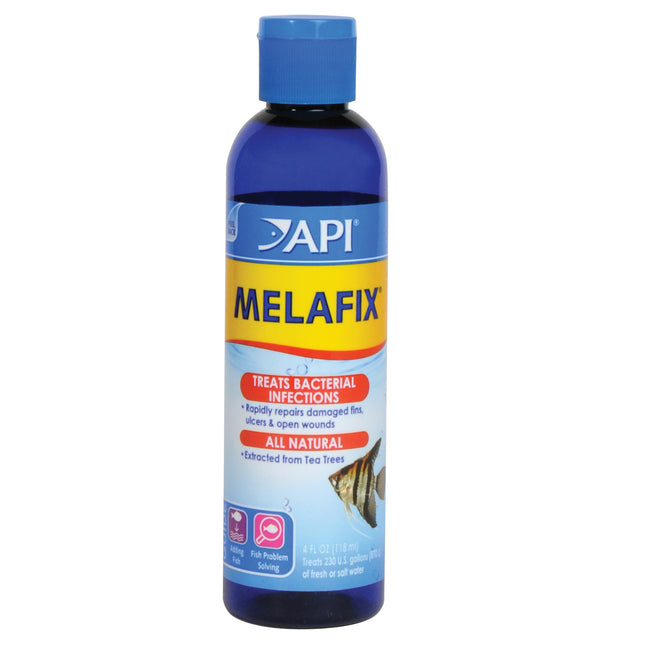
API API - Melafix (237ml)
API MELAFIX Freshwater Fish Bacterial Infection Remedy soothes the transition from store to home by reducing the risk of your fish developing a disease. The fish you bought may already carry a disease. Disease is often difficult to detect, particularly in its early stages. Treat bacterial infections in your fish and reduce the risk of spreading illness to other fish with API MELAFIX Freshwater Fish Bacterial Infection Remedy. Bacterial diseases are caused mostly by dirty aquarium conditions and the addition of infected fish. Fish that are injured and have open wounds are especially susceptible, even in seemingly clean tanks. Bacterial infections, like fin and tail rot, eye cloud, pop eye, body slime and mouth fungus destroy tissue and other organs, and if left untreated, can cause death. API MELAFIX Freshwater Fish Bacterial Infection Remedy is an all-natural antibacterial treatment that heals open wounds, treats bacterial infections and promotes re-growth of damaged fins and tissue, usually within a week. Just add 5 ml per 38 liters of aquarium water. It will not adversely affect the biological filter, alter the pH or discolour the water. For effective treatment, dose infected fish daily for 7 days, and continue afterward if necessary. Dose new fish daily for 3 days. Remove activated carbon from filter before use, if possible. API Aquarium Treatment Supplies are designed to work in conjunction with each other to provide best results to control algae, promote healthy bacterial growth and help control and cure fish diseases and conditions such as ich and fin rot. They work to provide a safe, hospitable environment for fish such as tropical community fish, cichlids, goldfish and more. With API, you can spend more time admiring your fish, and less time scrubbing your tank. Make sure to use all products as directed in order to ensure the best results.
$40.99
-

Tetra Tetra - TetraMin Tropical Flakes (12g)
Tetra’s "Clean and Clear Water Formula" means that the flakes are even easier to digest and do not leach colour thereby keeping aquarium water clean and clear. TetraMin® continues to be made with patented, health enhancing ProCare. This precise blend of immunostimulants, vitamins, biotin and Omega-3 fatty acids is custom designed to strengthen fish’s resistance to disease and stress.
$9.79
-

Blue Planet Blue Planet - LED Pod Lunar Blue
Blue Planet LED Pod Lunar Blue is suitable for both marine and freshwater aquariums. Good for general tank lighting with a deep water effect. 445nm, 1 Watt, 475 Lumens.
$16.99
-

Pet Pacific Misc. African Shade Leaf on Log 10cm
Bring your aquarium to life with Pets Domain’s array of realistic artificial aquarium plants. From ferns and palms to Caladium and Anubius, there’s an ornament to suit every aquarist. All artificial plants are non-toxic and aquarium safe.
$8.79
-

Pet Pacific Misc. Bioscape Tropic Air Pump 1000 with Check Valve
Bioscape Air Pumps are designed to increase water movement in aquariums for proper oxygenation, which helps to create a healthier environment for fish and plants. Bioscape Air Pumps offer a powerful and consistent airflow whilst maintaining silent operation. Included with the air pump is a check valve for an overall effective result. Suitable for tanks up to 45L Pumps 1L per minute 1 Outlet
$26.99
-

Sera sera Vipan Tropical Flakes 10L (2kg)
Vipan Flakes is the staple food consisting of floating flakes without dyes and preservatives for all ornamental fish eating at the water surface.It contains insect meal as a high quality protein source which is also resource saving.The balanced composition with natural ingredients and prebiotics allows for a diet very close to nature that supports healthy growth and strong development. The flakes retain their shape for a long time and do not cloud the water. Benefits: * flakes that retain their shape for all fish eating at the surface * with 4% insect meal as a sustainable protein source * with prebiotic effect, beneficial to health Feeding Guide: Feed once or twice daily, only as much as the animals take up within a short time. Ingredients: fish meal, wheat flour, brewers yeast, Ca-caseinate, crude lecithin, insect meal (Hermetia illucens) (4%), gammarus meal, spirulina, whole egg powder, sea algae meal, mannan oligosaccharides (0.4%), cod-liver oil, alfalfa, stinging nettle, parsley, paprika, green-lipped mussel meat meal, spinach, carrots, Haematococcus algae, fenugreek seeds, garlic, fennel seeds, anise seeds.
$144.39


