


Aquarium Water Care & Treatments


Aquarium Water Care & Treatments
-

Aquasonic Aquasonic - Algicide (100ml)
Aquasonic Algicide is a safe broad spectrum algae treatment that controls many types of annoying algae, while remaining gentle to aquarium plants. Algicide will not affect aquarium plants or fish, provided it is used in the correct dosage. Store in the closed, original container in a cool dry place. Keep out of reach of children. Do not store in direct sunlight. Dispose of empty container by wrapping paper, placing in a plastic bag, and putting the rubbish. Avoid contact with eyes and skin. Wash hands after use. Directions for Use: Do not use in aquariums containing fish intended for human consumption. Shake bottle vigorously before each application. Use at the rate of 1ml (20 drops) per 20 litres of aquarium water. Do not overdose as plant damage may result. Maintain aeration and filtration during treatment. Results should be evident after 7 days. Treatment may be repeated after 14 days if necessary. If algae persists, consider decreasing the amount of light the aquarium receives and increasing the frequency of partial water changes. Remember: High standards of aquarium management must be maintained to prevent disease, as fish diseases are often management related. Consult your veterinarian or aquarium dealer for accurate diagnosis and advice. How to Prepare: To calculate approximate tank capacity: multiply length x width x water level height (in cm) and divide by 1,000 litres. First Aid: If poisoning occurs, contact a doctor or Poisons Information Centre. Phone: Australia 13 11 26; New Zealand 0800 764 766.
$10.39
-

Aquasonic Aquasonic - Power Water Conditioner (100ml)
Use Power Water Conditioner when starting up an aquarium to remove chlorine and chloramines which can be very harmful to aquarium fish. Power also contains elements that will remove heavy metals from the aquarium. Fungal inhibitors have also been added to help guard against infections. Directions for Use: 1ml per 10L of water. Use Power when starting up a new aquarium or when adding water for a water change. Premix Power with tap water before adding to aquariums containing fish. After using Power in freshwater aquariums always add Aquasonic Water Conditioning Salts to maintain that natural environment for your fish. In marine aquariums, use Power before the addition of Aquasonic Ocean Nature Sea Salt.
$13.39
-
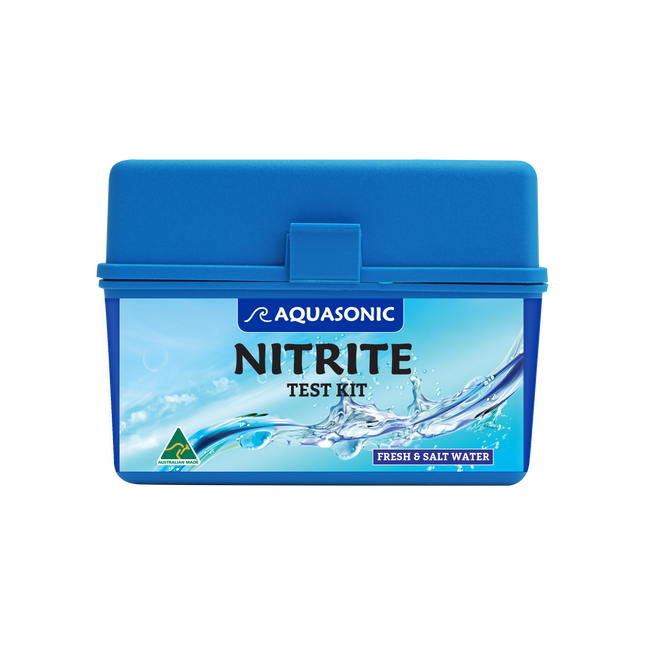
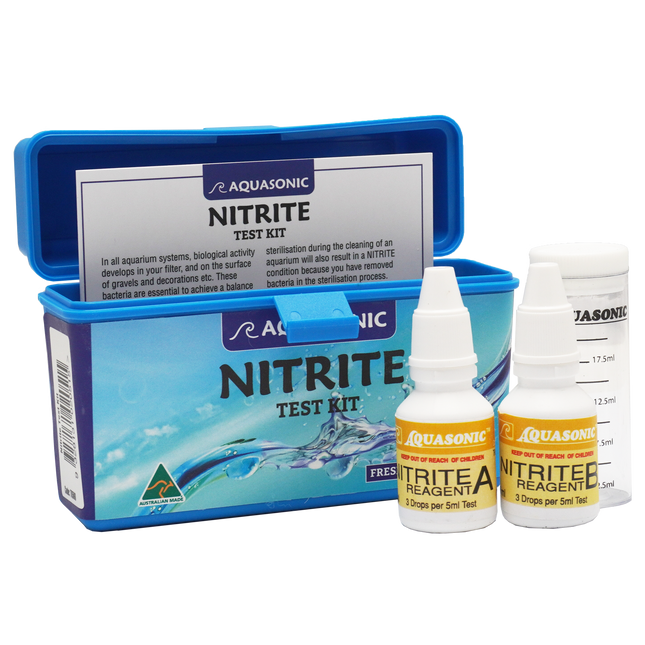
Aquasonic Aquasonic - Nitrite Test Kit
In all aquarium systems, biological activity develops in your filter, and on the surface of gravels and decorations etc. These bacteria are essential to achieve a balance in your aquarium and different types of bacteria need to be present in the right proportions to break down waste and deal with ammonia, nitrite and nitrate, which can all be harmful to your fish. Every time you change or add something in your tank, or you clean it, you potentially upset the balance because you are effectively removing some of these bacteria. The replacement of plants and coral or cleaning of filters, gravel or substrate, even in part, can also cause a NITRITE condition to re-occur, even in well-established aquariums. Complete sterilisation during the cleaning of an aquarium will also result in a NITRITE condition because you have removed bacteria in the sterilisation process.NITRITE is toxic to fish, even in quantities as small as 1ppm. If you are starting a new aquarium, it is recommended that you don’t put new fish into the system until a NITRITE reading of less than 1ppm is achieved (ideally zero). Recurring Nitrite Condition The biological activity in a filter may take as long as three months to develop fully, and in this time, due to increases in the number of fish, the NITRITE condition may re-occur. Evidence has shown, by lowering the pH to 7.5, the toxicity of NITRITE is minimised. If a system does develop nitrite on a continual basis, after it is fully conditioned, it may mean that the surface area of the biological filter is undersized, or the number of fish in the tank is too great. Assisting Biological Establishment To assist, ensure the temperature is steady, at or above 26 deg C, check the flow of water through the filters is well distributed and sufficient, and oxygen levels are adequate. When cleaning your filter media, use cold or lukewarm water only as hot water will kill the bacteria. To Break The Ammonia - Nitrite - Nitrate Cycle: Perform a water change Remove anything that can cause ammonia to form (e.g., dead organic matter or excess fish waste) from amongst the substrate (e.g., gravel cleaner) Use Aquasonic AMMO-GONE to neutralise ammonia in the system. The manual addition of live strains of nitrifying bacteria can also aid in kick starting the biological activity in the filter system. Directions for Use: Rinse the clean test tube and cap several times in the water to be tested. Fill the test tube to the 5ml mark with the water to be tested. Add 3 drops of Nitrite Reagent A. Add 3 drops of Nitrite Reagent B. Cap the test tube and invert twice. Wait a minimum of 2 minutes, but no longer than 3 minutes, to compare the test with the colour chart. After this time the test will continue to colour, but further colouration is irrelevant. Place the test tube on the white background of the colour chart and view vertically down the tube. The colour in the test tube is best viewed with natural light behind you. After completion of the test, wash the test tube carefully as a previous test could influence the next one.
$33.49 $26.00
-
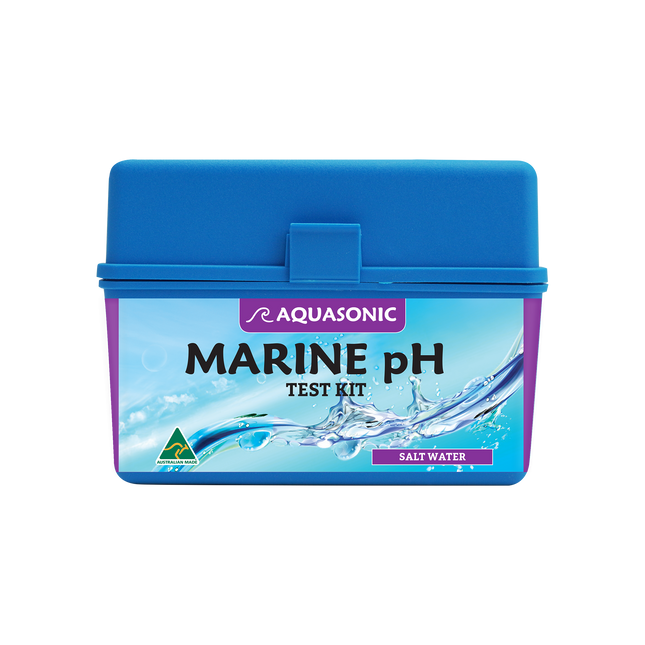
Aquasonic Aquasonic - Marine pH Test Kit
Normal pH The pH of water in the ocean is around 8.1. This is also the recommended pH of a marine aquarium, with levels slightly above or below this value considered acceptable. This happens as a result of the carbonate hardness value of sea water, which is about 125ppm. However, certain events such as biological filtration of a marine aquarium, tend to reduce the carbonate hardness value and therefore lower the pH. Also certain influences, such as carbon dioxide, can affect the reading of pH value. Biological Filtration The assimilation of waste by bacteria in the filter of a marine aquarium is an acidifying process and in time will reduce the carbonate hardness value of the water. As this occurs, the pH value will fall. Carbonate hardness levels can be maintained with Aquasonic Carbonate Hardness Generator Powder. At a pH of 8.1 the carbonate hardness value should be 125ppm. If the carbonate hardness value of a marine aquarium is correct, yet pH values are not, the influence of carbon dioxide should be considered. The Effects of CO2 For pH to read correctly, carbon dioxide must be in equilibrium with the atmosphere. Carbon dioxide is produced by fish, plants, corals and bacteria assimilating waste in the biological filter in the aquarium. Some trickle (mini-reef) filters can expel carbon dioxide so efficiently that the quantity of carbon dioxide is less than the atmosphere, so pH reads higher than it really is. Likewise, in an aquarium with substrate filtration, carbon dioxide has some difficulty escaping as it is produced by the biological filter and other life. Under these conditions, carbonic acid may be formed and pH will read lower. Using pH to Advantage During the development of bacteria in a biological filter, ammonia and nitrate conditions ensure. Both are deadly to marine fish. The toxicity of ammonia and nitrite, however, is in direct relation to the pH value of the water in the system. By lowering the pH, the toxicity of these deadly conditions is minimised. To lessen the toxicity of nitrite, lower the pH to 7.5.
$26.49
-

Aquasonic Aquasonic - Amazon Water Conditioner (5L)
Water in rainforest rivers is conditioned by leaf tannins, humic and organic acids. Some leaching of ground minerals also occurs. These conditions are natural disease inhibitors for fish. The water is soft, usually below 50ppm hardness and a pH between 5.5 and 6.5. Amazon Water Conditioner recreates these same conditions in an aquarium. The result is brighter and more active fish, with a high resistance to disease. For aquarium use only. Keep out of reach of children. Directions for Use: 2ml per 10L of aquarium water. Retreatment only necessary when changing water. For Aquarium use only. For soft water species. To calculate approximate aquarium capacity: Multiply the length x width x water level height (in cm) and divide by 1,000 for litres.
$82.29
-
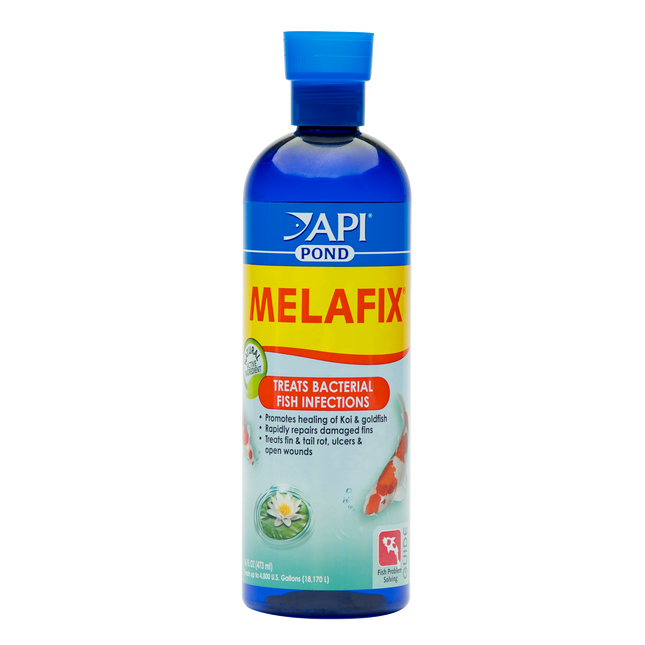
API API - Pond Care Melafix (473ml)
API® POND MELAFIX fish remedy acts as an all-natural, antibacterial remedy for koi and goldfish diseases, including eye cloud, mouth fungus, fin & tail rot, damaged fins, ulcers, and open wounds. Use if you notice these symptoms among fish in your pond, or when adding new fish. POND MELAFIX fish remedy is safe for snails and other invertebrates, and will not harm aquatic plants, affect pH, or adversely affect your pond’s natural biological filter. Remove carbon from pond filter and turn off UV lights and ozone-producing units, if applicable. Add 15 ml. for every 150 gallons of pond water or 0.25 cup for every 600 gallons. As a preventive when introducing new fish to the pond: dose daily for 3 days. To treat infections or heal wounds: dose daily for 7 days. What does API POND MELAFIX™ fish remedy do? API POND MELAFIX fish remedy is a treatment for external bacterial infections in fish, such as fin rot or open wounds. Is API POND MELAFIX™ fish remedy safe with invertebrates such as snails and shrimp? Will it harm the biological filter or pond plants? Yes, API POND MELAFIX fish remedy is completely safe with invertebrates such as snails and shrimps. It will not harm the natural aquarium cycle or plants.
$53.19
-

API API - pH Proper 7.5 Powder Jar (260g)
API pH Proper 7.5 Powder Jar automatically sets and stabilizes the pH level in freshwater aquariums to 7.5 which is perfect for Goldfish, Guppies, Barbs, Swordtails, Platies and Mollies. It also removes toxic compounds from tap water such as chlorine, neutralises chloramines, detoxifies heavy metals, and adds electrolytes, making tap water safe for fish. Use this aquarium treatment when setting up a new aquarium, adjusting pH, or changing water. pH in an aquarium can fluctuate due to fish waste, uneaten food and addition of tap water. It is recommended to test water for pH weekly. pH is the measure of acidity of water, on a scale ranging from 0 to 14. A pH of 0 is the most acidic, while a pH of 14 is the most alkaline. Water with a pH of 7.0 is considered ""neutral"". Different geographies have different tap water conditions with different pH levels, while fish require a specific pH level to thrive. API Aquarium Treatment Supplies are designed to work in conjunction with each other to provide best results to control algae, promote healthy bacterial growth and help control and cure fish diseases and conditions such as ich and fin rot. They work to provide a safe, hospitable environment for fish such as tropical community fish, cichlids, goldfish and more. With API, you can spend more time admiring your fish, and less time scrubbing your tank. Make sure to use all products as directed in order to ensure the best results.
$37.99
-

API API - Stress Zyme (30ml)
API - Stress Zyme Freshwater and Saltwater Aquarium Cleaning Solution reduces aquarium maintenance by creating a naturally balanced aquarium. Fish waste, sludge, uneaten food and other organic compounds can cause harmful water conditions including ammonia and nitrite poisoning and breathing difficulty. They can also be difficult and time-consuming to remove especially from rock, coral and gravel. API Stress Zyme contains over 300 million live bacteria per teaspoonful to consume sludge and organic debris, keeping gravel and glass clean naturally and boosting the natural aquarium cycle, reducing aquarium maintenance over time. Use it weekly in freshwater and saltwater aquariums to maintain a strong biological filter and a healthy, clean aquarium. For over 50 years, API has been creating innovative, research-driven solutions that make it easier to care for your fish and aquarium. API Aquarium Treatment Supplies are designed to work in conjunction with each other to provide best results to control algae, promote healthy bacterial growth and help control and cure fish diseases and conditions such as ich and fin rot. They work to provide a safe, hospitable environment for fish such as tropical community fish, cichlids, goldfish and more. With API, you can spend more time admiring your fish, and less time scrubbing your tank. Make sure to use all products as directed in order to ensure the best results.
$11.99
-
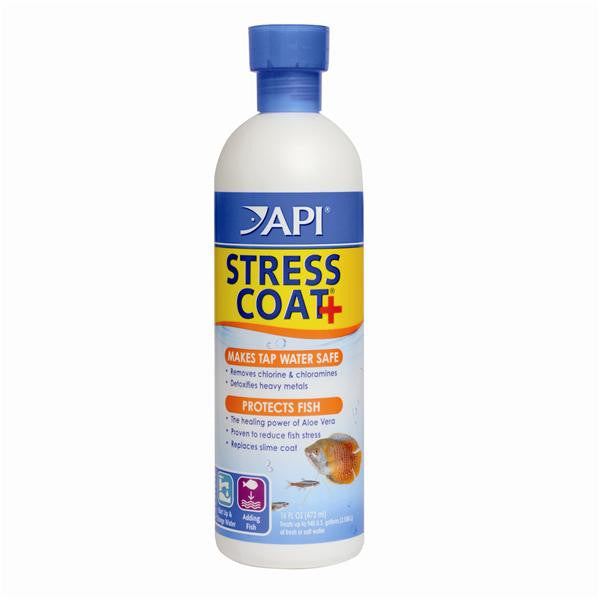
API API Stress Coat Water Conditioner 237ml
Treat your tap water and provide a safe environment for freshwater fish instantly and easily with API STRESS COAT Freshwater Aquarium Water Conditioner. Tap water contains chlorine, chloramines and ammonia which can cause gill and tissue damage, breathing difficulty, stress and death. API STRESS COAT Aquarium Water Conditioner works instantly as a water conditioner to remove chlorine and chloramines from tap water and neutralize heavy metals. API STRESS COAT Freshwater Aquarium Water Conditioner Treatment contains aloe vera, and it is scientifically proven to reduce fish stress by 40% and heal damaged fish tissue. This conditioner replaces the natural secretion of slime that is interrupted by handling, shipping, fish fighting, or other forms of stress and helps heal torn fins and skin wounds while promoting tissue regeneration
$36.79
-

API API - Hand Held Algae Pad for Acrylics
The API ALGAE PAD is a sturdy, long-lasting pad which gives you hand-held control to reach in and clean the algae from nooks and crannies of your acrylic aquarium. Product scrapes and removes algae quickly and easily, and may be used as frequently as needed. Do not use on dry surfaces. Rinse pad with tap water before and after use. Not for use on glass aquariums.
$13.79
-

API API - Hand Held Algae Pad for Glass
The API ALGAE PAD is a sturdy, long-lasting pad which gives you hand-held control to reach in and clean the algae from nooks and crannies of your glass aquarium. Product scrapes and removes algae quickly and easily, and may be used as frequently as needed. Do not use on dry surfaces. Rinse pad with tap water before and after use. Not for use on acrylic aquariums
$13.79
-


Prodibio Prodibio - Start Up 30 vials (900L)
START UP is used to easily and safely start a freshwater or saltwater aquarium.It allows the acclimatization of fish in their new habitat. START UP accelerates the nitrogen cycle by combining STOP AMMO START, which traps ammonia, and BIODIGEST START, which contains natural, living, purifying bacteria. They contribute to the biological filtration of the aquarium. The introduction of 1/3 of the most robust fish is possible after about 4 hours in fresh water and 12 hours in sea water. We recommend its use: When starting any new aquarium. When renovating an aquarium. Usage: 360-100L (30 vials)
$101.19


