


Aquarium Water Care & Treatments


Aquarium Water Care & Treatments
-

Aquasonic Aquasonic - Activated Carbon Pellets (200g)
Aquasonic Activated Carbon removes dissolved organic impurities, water discolouration, odour and heavy metals. This product is a highly activated carbon, capable of holding up to 30% of its own weight in chemical impurities and organic contaminants. Aquasonic Activated Carbon is more efficient and will outlast conventional charcoal/carbons. Smaller quantities of Aquasonic Carbon may be used. For aquarium use only. Keep out of reach of children. Directions for use: Rinse before use. Fill the area between filter material in the filter. Works optimally with a filter (nylon) bag. Reseal any unused activated carbon. To calculate approximate aquarium capacity: Multiply the length x width x water level height (in cm) and divide by 1,000 for litres.
$12.89
-

API API Aqua Essential Water Conditioner 473ml
AQUA ESSENTIAL water conditioner is a highly concentrated all-in-one water conditioner that instantly makes tap water safe for fish by removing chlorine, chloramine and detoxifies heavy metals commonly found in tap water. AQUA ESSENTIAL water conditioner instantly removes toxic ammonia, nitrate and nitrite levels in freshwater, saltwater and planted aquariums. Toxic ammonia continually released by fish through their gills, urine and solid waste. Uneaten food and decaying organic matter also add ammonia. Small amounts of ammonia stress fish; large amounts of ammonia will kill fish. This unique formula binds with ammonia, nitrite, and nitrate rendering them non-toxic and allowing the biofilter to more efficiently remove them. Use at start-up and whenever adding or changing water or when tested levels of ammonia, nitrates or nitrite are high. When adding, transporting or quarantining fish, we recommend using API STRESS COAT™ water conditioner which is ideal for use with AQUA ESSENTIAL water conditioner. Instructions: Using dosing cap on bottle, add 5 ml. per 50 gallons of aquarium water to treat tap water. Add 5 ml. per 10 gallons of aquarium water to remove ammonia, nitrite, and nitrate. We advise you to wait 24 hours after dosing then do a water change. If you dose within that 24 hour period there is no danger to the animals/plants in your aquarium. A follow-up water change is always beneficial to an aquatic system. FAQs: Will API® AQUA ESSENTIAL™ affect my aquarium’s protein skimmers? AQUA ESSENTIAL will not disrupt any type of protein skimmer. Is there a possibility to overdose AQUA ESSENTIAL in my aquarium? When dosing AQUA ESSENTIAL we advise following the directions, but the product formulation does allow for a margin in the event a tank is accidentally dosed with slightly higher amount than specified. Is it safe to use AQUA ESSENTIAL in my aquarium with other aquatic animals like snails or shrimp? Yes, it is safe to use AQUA ESSENTIAL with other aquatic animals. Can I use AQUA ESSENTIAL with other API® products? AQUA ESSENTIAL can be used in conjunction with any other API water conditioner or medication. Does AQUA ESSENTIAL affect the pH in my aquarium? When AQUA ESSENTIAL is dosed according to the label the pH will not be affected. Can I double the dose for AQUA ESSENTIAL if I have high levels of chloramines? AQUA ESSENTIAL is designed to treat chloramines without the need to use a double dose. For those customers who automatically double dose there is not a problem using AQUA ESSENTIAL for this, but it is not necessary. How often should I wait between doses of AQUA ESSENTIAL? Once a dose is provided to the aquarium, it is recommended to wait for 24 to 48 hours between doses. How long will AQUA ESSENTIAL bind ammonia, nitrite, and nitrate for? Once AQUA ESSENTIAL is dosed it will bind the ammonia, nitrite and nitrate for up to 48 hours or longer. Testing is the best way to judge if additional dosing is necessary. In water conditions with highly elevated levels, overstocked with fish, or extremely overfed we always recommend a partial water change after 24 hours to aid the fish in the best water quality. Also, any ammonia or nitrite that is bound by AQUA ESSENTIAL is metabolically available for beneficial bacteria to process. So your biological filters will be able to function when using AQUA ESSENTIAL. How much ammonia will be removed per dose of AQUA ESSENTIAL? When treating for ammonia, with a 5 ml/10 gal. dose of AQUA ESSENTIAL, you should expect a 20-40 ppm reduction in ammonia. How much nitrite will be removed per dose of AQUA ESSENTIAL? When treating for nitrite, a 5 mL/10 gal. dose of AQUA ESSENTIAL, you should expect a 15-30 ppm reduction in nitrite. How much nitrate will be removed per dose of AQUA ESSENTIAL? When treating for nitrate, a 5 mL/10 gal. dose of AQUA ESSENTIAL, you should expect a large reduction of nitrate, ~ 40-60 ppm reduction in nitrate.
$45.29
-

Aquasonic Aquasonic - Algicide (250ml)
Aquasonic Algicide is a safe broad spectrum algae treatment that controls many types of annoying algae, while remaining gentle to aquarium plants. Algicide will not affect aquarium plants or fish, provided it is used in the correct dosage. Store in the closed, original container in a cool dry place. Keep out of reach of children. Do not store in direct sunlight. Dispose of empty container by wrapping paper, placing in a plastic bag, and putting the rubbish. Avoid contact with eyes and skin. Wash hands after use. Directions for Use: Do not use in aquariums containing fish intended for human consumption. Shake bottle vigorously before each application. Use at the rate of 1ml (20 drops) per 20 litres of aquarium water. Do not overdose as plant damage may result. Maintain aeration and filtration during treatment. Results should be evident after 7 days. Treatment may be repeated after 14 days if necessary. If algae persists, consider decreasing the amount of light the aquarium receives and increasing the frequency of partial water changes. Remember: High standards of aquarium management must be maintained to prevent disease, as fish diseases are often management related. Consult your veterinarian or aquarium dealer for accurate diagnosis and advice. How to Prepare: To calculate approximate tank capacity: multiply length x width x water level height (in cm) and divide by 1,000 litres. First Aid: If poisoning occurs, contact a doctor or Poisons Information Centre. Phone: Australia 13 11 26; New Zealand 0800 764 766.
$17.39
-

Aquasonic Aquasonic - Ammo-Gone Water Conditioner (250ml)
Ammo-gone will neutralise ammonia, chlorine and chloramines, in fresh or salt water. When neutralising ammonia, use an Aquasonic Ammonia Test Kit to determine the level of ammonia present and the increase or decrease the dosage proportionally to neutralise it in one dose. In areas where ammonia or chloramines are a problem in tap water, Ammo-gone is essential. Use each time a new aquarium is installed, when water changes are made or transporting fish. If mixing salt water for marine aquariums, use Ammo-gone. Following the use of of Ammo-gone, use Aquasonic Water Conditioning Salts to create that ideal habitat. For trouble free saltwater, use Aquasonic Ocean Natures Sea Salt. For aquarium use only. Keep out of reach of children. Directions for Use: To neutralise chlorine or chloramines use 5ml per 20L of water. To neutralise ammonia, 5ml per 20L of water neutralise 0.75ppm ammonia. Ammo-gone has no effect on marine salts and can be use with invertebrates. Always treat new water before adding to your aquarium. Note: Ammo-gone may bleach clothing if accidentally spilled. Ammo-gone may cause faulty readings with ammonia test kits that use Nessler's reagents.
$22.49
-
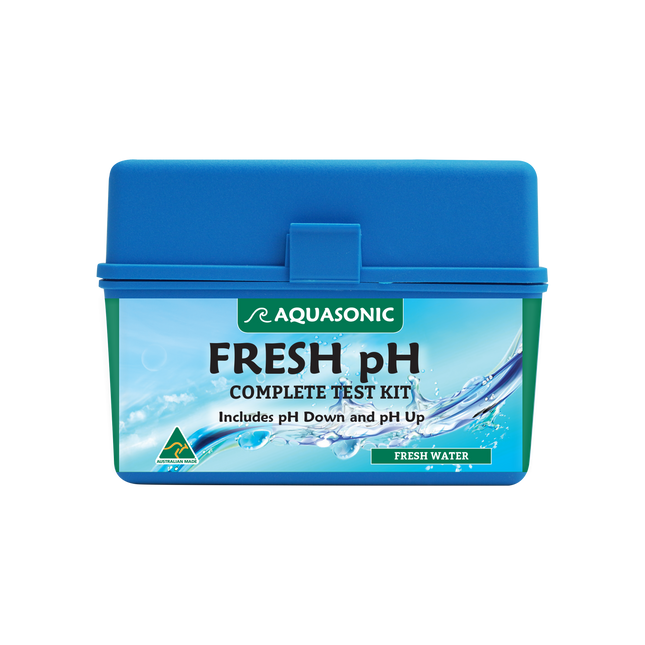
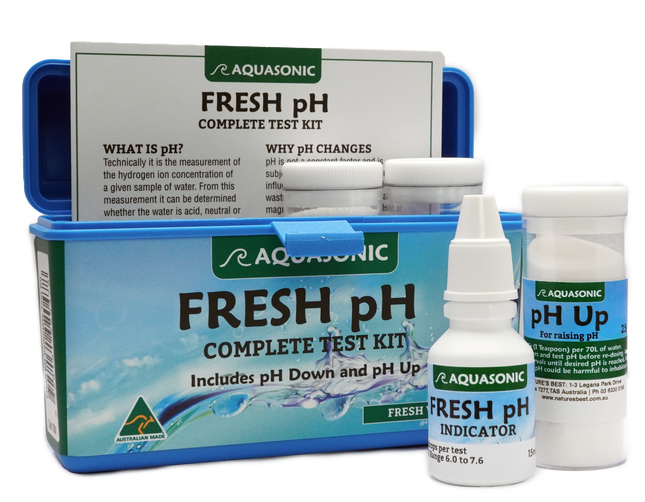
Aquasonic Aquasonic - Complete Freshwater pH Test Kit
Products For pH Adjustment pH Down (contained in this kit) Use 5g (1 teaspoon) per 70L of water. Wait 12 hours and test pH before redosing. Re-dose at 12 hour intervals until desired pH is reached. pH Up (contained in this kit) Use 5g (1 teaspoon) per 70L of water. Wait 12 hours and test pH before re-dosing. Re-dose at 12 hour intervals until desired pH is reached. Directions for Use Rinse a clean test tube and cap several times in water to be tested. Fill to line (12.5ml) with water to be tested. Add 3 drops of Indicator solution Place the test tube on the white background of the colour chart, view vertically (down inside the test tube) with the light behind you. The colour in the test tube is best viewed with natural light. View immediately. Note: Adjust pH slowly.
$31.09 $24.00
-
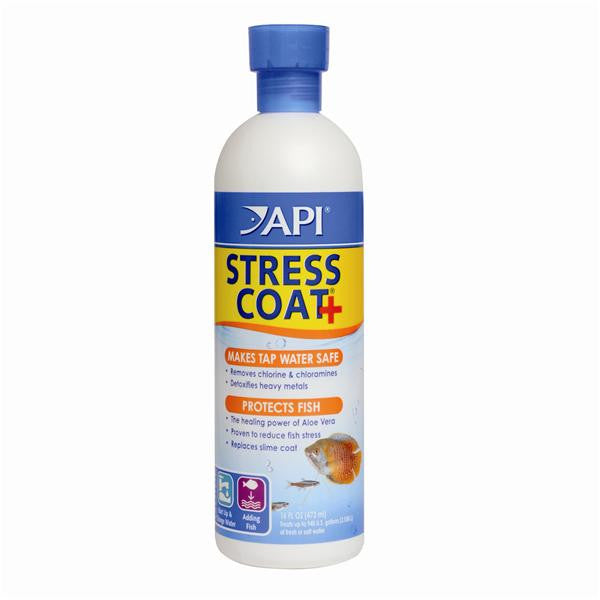
API API Stress Coat Water Conditioner 118ml
API - Stress Coat (118ml) treats your tap water, providing a safe environment for freshwater fish instantly and easily. Tap water contains chlorine, chloramines and ammonia which can cause gill and tissue damage, breathing difficulty, stress and death. This works instantly as a water conditioner to remove chlorine and chloramines from tap water and neutralize heavy metals. It contains aloe vera, and it is scientifically proven to reduce fish stress by 40% and heal damaged fish tissue. This conditioner replaces the natural secretion of slime that is interrupted by handling, shipping, fish fighting, or other forms of stress and helps heal torn fins and skin wounds while promoting tissue regeneration. API Aquarium Treatment Supplies are designed to work in conjunction with each other to provide best results to control algae, promote healthy bacterial growth and help control and cure fish diseases and conditions such as ich and fin rot. They work to provide a safe, hospitable environment for fish such as tropical community fish, cichlids, goldfish and more. With API, you can spend more time admiring your fish, and less time scrubbing your tank. Make sure to use all products as directed in order to ensure the best results.
$25.09
-

API API - CO2 Booster (237ml)
Carbon deficiency is one of the leading causes of poor plant growth in aquariums. API® CO2 BOOSTER product adds essential liquid carbon for planted aquariums to fuel the photosynthetic process and turn light energy into new plant growth. API CO2 BOOSTER product supplies simple carbon compounds, and releases carbon to aquarium plants. Product may be used alone, or in conjunction with CO2 systems. Safe for use with freshwater fish, and will not alter pH. Instructions: Add 1 ml. per 10 gallons of aquarium water. Dose once a day. FAQs: Is the effectiveness of API CO2 BOOSTER™ product diminished by aeration and/or water circulation like CO2 gas? No, API CO2 BOOSTER product is an organic compound, not a gas. Is API CO2 BOOSTER™ a gas? No, API CO2 BOOSTER product is an organic compound, not a gas. Why can API CO2 BOOSTER™ product be dosed daily, but API LEAF ZONE™ plant fertilizer is only dosed weekly? API CO2 BOOSTER product breaks down chemically to supply carbon to plants within 24 hours, thus the reason for re-dosing every 24 hours. The organic compound slowly breaks down over the 24 hour period, allowing the plants to absorb what they need. Meanwhile, API LEAF ZONE plant fertilizer is stable in the water until the nutrients are utilized by the plants, allowing for a weekly dose. Can API CO2 BOOSTER™ product be used with shrimp? Yes, API CO2 BOOSTER product is safe for use with shrimp. Dosing directions should be followed. Does the effectiveness of API CO2 BOOSTER™ product change with the different levels of KH or any other water parameters? No, it does not. There is not enough chemical change in the water to effect water parameters. Will the required amount of API CO2 BOOSTER™ product vary based upon the number of plants in an aquarium? No, simply dose according to the instructions, and you’ll get great results.
$38.59
-
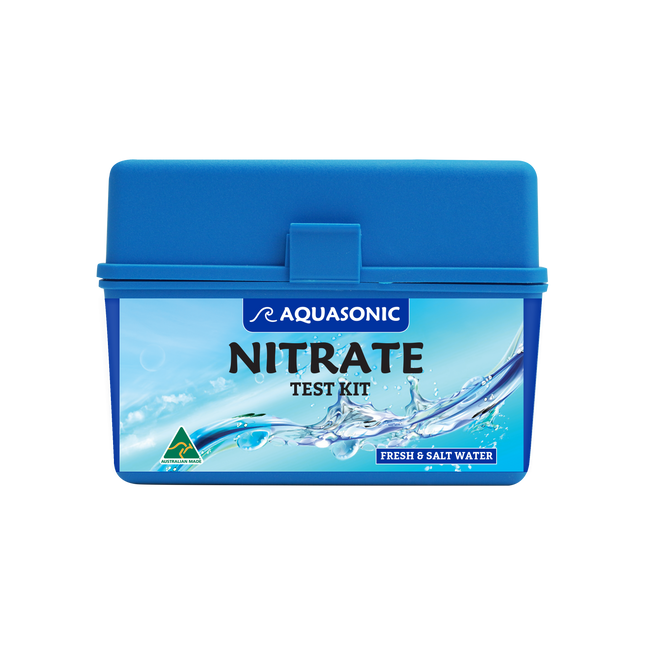
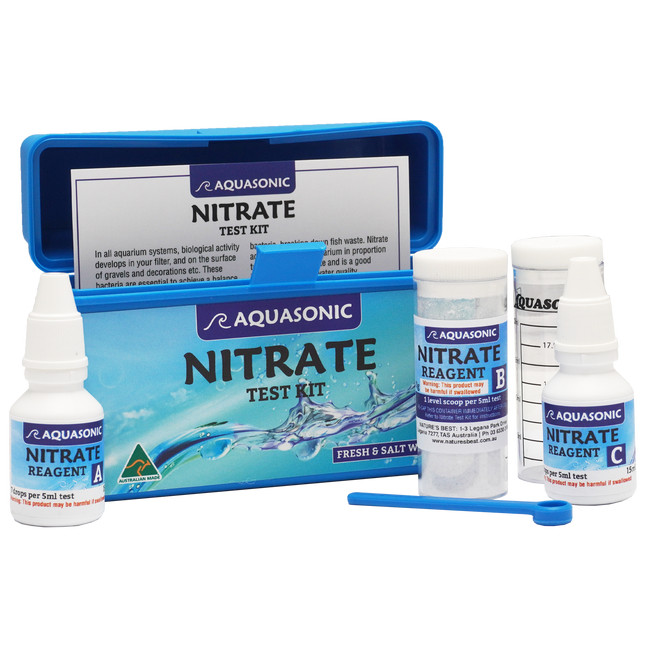
Aquasonic Aquasonic - Nitrate Test Kit
In all aquarium systems, biological activity develops in your filter, and on the surface of gravels and decorations etc. These bacteria are essential to achieve a balance in your aquarium and different types of bacteria need to be present in the right proportions to break down waste and deal with ammonia, nitrite and nitrate, which can all be harmful to your fish. Every time you change or add something in your tank, or you clean it, you potentially upset the balance because you are effectively removing some of this bacteria. Nitrate Nitrate ions are produced as a result of biological action occurring mainly in your aquarium filter system. It is the residue of a chain reaction by aerobic bacteria, breaking down fish waste. Nitrate accumulates in an aquarium in proportion to the stock load waste and is a good indicator of general water quality. Permissible Nitrate Levels As nitrate levels increase, water quality decreases. The quantity of permissible nitrate varies with the particular aquatic life being cultured. a) For marine systems culturing fish, acceptable levels are 20ppm to 40ppm. Many species of marine fish will accept higher levels of 80ppm to 100ppm without apparent effect on their health. But it is recommended that when levels climb above 40ppm steps should be taken to lower the nitrate to avoid stress. b) For reef systems culturing invertebrates, much lower levels of nitrate are acceptable. A level of 5ppm or less is optimum. Again, many invertebrates will accept higher levels but once these levels climb above 20ppm many of the more sensitive invertebrates will be irreparably damaged. It has been shown that small quantities of around 5ppm of nitrate are of assistance in culturing marine plants. Nitrate tests on reef systems should occur weekly and levels should be kept below 10ppm. c) Freshwater fish. Tolerance to nitrate with freshwater fish is higher than saltwater species. Some delicate species will tolerate around 50ppm, but some species will tolerate far higher levels. It is recommended that as nitrate levels approach 50ppm steps should be taken to reduce the level. Lowering Nitrate The easiest method to lower nitrate is to change water. Regular water changes should ensure that the nitrate levels stay within acceptable limits. Recommended minimum water change requirements are 25% per month. If water changes do not keep the nitrate at acceptable levels, then perhaps the number of fish in the tank is too great for your aquarium system, so reduce the number of fish. Denitrification filters can lower nitrate successfully, but this must be closely monitored to avoid dangerous gases that can harm aquarium inhabitants. Marine plants and algae can use some nitrate as nutrients and are a definite advantage in the control of nitrate. To Break The Ammonia - Nitrite - Nitrate Cycle: Perform a water change Remove anything that can cause ammonia to form (e.g., dead organic matter or excess fish waste) from amongst the substrate (e.g., gravel cleaner) Use Aquasonic AMMO-GONE to neutralise ammonia in the system. The manual addition of live strains of nitrifying bacteria can also aid in kick starting the biological activity in the filter system. Directions for Use to Determine the Nitrate Level in Water: Rinse empty test tube and cap several times in the water to be tested. Fill the test tube to the 5ml mark and add 7 drops of Reagent A. Swirl to mix. Add 1 level scoop of Reagent B and gently swirl the solution for a few seconds. Ensure that Reagent B is kept dry at all times. Add 7 drops of Reagent C, mix for a few seconds and let the solution stand for 3 minutes after which time full colour development will have occurred. Place the test tube on the white background of the colour chart, view vertically down the tube. The colour in the test tube is best viewed with natural light behind you. On completion of the test, rinse clean the test tube. Ensure Reagent B remains dry and that the cap is firmly in place. Note: If the nitrate level in the test solution is more than 80ppm (use your colour chart to determine) then you can still determine the level by diluting the sample with nitrate free water (preferably distilled water). For example, to prepare a test that will measure up to 160ppm nitrate, mix a sample with half water to be tested and half water that is nitrate free. Then multiply the results of the test by 2. To read up to 320ppm nitrate, use 25% water to be tested and 75% nitrate free water, then multiply the result by 4. *Colour chart to be used as a base guide only. Colours may vary according to various water conditions.
$39.79 $31.00
-

API API - Algae Scraper for Glass Aquariums
The API ALGAE SCRAPER is an incredibly durable algae scraper with an 18” long handle to effectively clean glass aquarium walls and prevent user from getting too wet. This item scrapes and removes algae quickly and easily and may be used as frequently as needed. Do not use on dry surfaces. Rinse pad with tap water before and after use. Not for use on acrylic aquariums. FAQs Can I use an API ALGAE SCRAPER on any type of aquarium? No, API designs two separate scrapers for two different types of aquarium material: glass and acrylic. The appropriate scraper should be used on the corresponding tank to reduce the risk of scratching or damaging your aquarium. When should I use the API ALGAE SCRAPER? Use the API ALGAE SCRAPER to eliminate unsightly algae on aquarium walls as needed, but roughly once a week at a minimum to ensure tank cleanliness and clarity. Use any time algae accumulates on the walls of your aquarium.
$39.79
-

Aquasonic Aquasonic - Betta Protech (50ml)
Water changes can be very tough on aquarium fish, often resulting in disease or even fatality. Betta Protech has been formulated to effectively assist fish with recovery after a water change, transport or handling. Betta Protech replaces slime coating and makes fish feel well by providing a powerful vitamin mix including: B1, B2, B6, B12, E, and A. This enables the fish to fight off disease and start feeding again quickly. Use during and after transport, after a water change, after any handling of fish or simply as a vitamin supplement. Fungal inhibitors have also been added to help guard against infections. Directions for Use: 1ml per 20ml for general use. For fish in a poor state use treatments as high as 1ml per 5ml to assist in faster recovery. For transport use general dose rates. 1ml = approx 15 drops. To calculate approximate aquarium capacity: Multiply the length x width x water level height (in cm) and divide by 1,000 for litres.
$11.39
-

Aquasonic Aquasonic - Betta Water Conditioner (50ml)
Aquasonic Betta Complete Water Conditioner will remove chlorine and chloramines and detoxify any heavy metals found in the water supply, plus it has an added fungal inhibitor to guard against infections to give your fish a safe and healthy environment. Directions for Use: Add 2 drops per 1L of water when setting up your Betta (Fighting Fish) aquarium or when adding new water.
$11.39
-

Aquasonic Aquasonic - Algicide (1L)
Aquasonic Algicide is a safe broad spectrum algae treatment that controls many types of annoying algae, while remaining gentle to aquarium plants. Algicide will not affect aquarium plants or fish, provided it is used in the correct dosage. Store in the closed, original container in a cool dry place. Keep out of reach of children. Do not store in direct sunlight. Dispose of empty container by wrapping paper, placing in a plastic bag, and putting the rubbish. Avoid contact with eyes and skin. Wash hands after use. Directions for Use: Do not use in aquariums containing fish intended for human consumption. Shake bottle vigorously before each application. Use at the rate of 1ml (20 drops) per 20 litres of aquarium water. Do not overdose as plant damage may result. Maintain aeration and filtration during treatment. Results should be evident after 7 days. Treatment may be repeated after 14 days if necessary. If algae persists, consider decreasing the amount of light the aquarium receives and increasing the frequency of partial water changes. Remember: High standards of aquarium management must be maintained to prevent disease, as fish diseases are often management related. Consult your veterinarian or aquarium dealer for accurate diagnosis and advice. How to Prepare: To calculate approximate tank capacity: multiply length x width x water level height (in cm) and divide by 1,000 litres. First Aid: If poisoning occurs, contact a doctor or Poisons Information Centre. Phone: Australia 13 11 26; New Zealand 0800 764 766.
$39.09


